
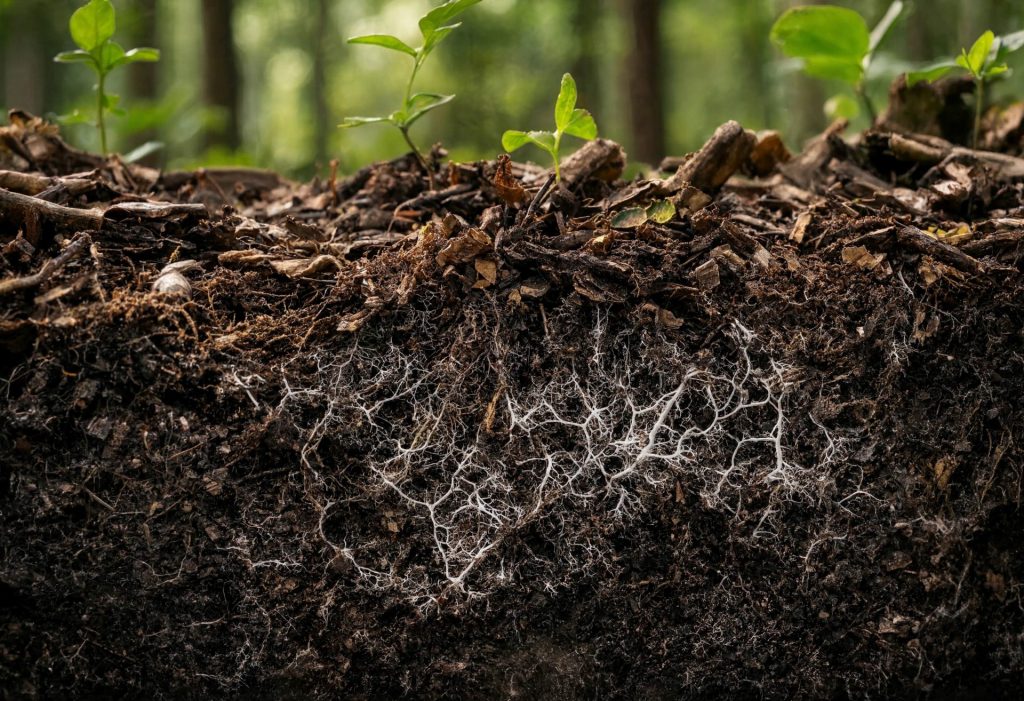
Successful native plant establishment depends on more than quality seed and favorable weather. Beneath the soil surface, an entire network of beneficial microorganisms works alongside plant roots to support healthy growth. Among the most important of these are mycorrhizal fungi, naturally occurring organisms that form symbiotic relationships with many native plant species.
By improving nutrient uptake, increasing drought tolerance, and supporting stronger root systems, mycorrhizal fungi can play a valuable role in helping native vegetation establish and thrive.
What Are Mycorrhizal Fungi?
Mycorrhizal fungi are naturally occurring soil fungi that attach to plant roots, creating a mutually beneficial relationship. As the plant grows, it provides carbohydrates to the fungi through photosynthesis. In return, the fungi extend far beyond the root system, helping the plant access water and nutrients that would otherwise be difficult to reach.
This partnership has existed in nature for millions of years and is an important component of healthy native ecosystems.
How Mycorrhizal Fungi Support Plant Growth
The network of fungal threads, known as hyphae, acts as an extension of the plant’s root system, increasing its ability to gather essential resources.
Benefits include:
- Improved absorption of water from the surrounding soil
- Increased access to phosphorus and other essential nutrients
- Enhanced root development and plant vigor
- Better tolerance to environmental stress
- Stronger long-term plant establishment
These advantages are especially valuable during the early stages of germination and seedling development.
Improving Drought Resistance
Greater Water Access
Because fungal networks extend beyond the reach of plant roots, they help plants access moisture from a larger volume of soil. This can be especially beneficial during periods of limited rainfall.
Reducing Plant Stress
Young native seedlings are particularly vulnerable to drought. Mycorrhizal fungi help reduce water stress by improving the efficiency of water uptake, allowing plants to maintain healthier growth under challenging conditions.
While no biological enhancement can eliminate the effects of prolonged drought, these natural partnerships can improve a plant’s ability to withstand temporary dry periods.
Enhancing Soil Nutrient Uptake
Healthy soils contain nutrients, but they are not always available to developing plants. Mycorrhizal fungi help bridge that gap.
Improved Phosphorus Availability
Phosphorus is one of the most important nutrients for root development, yet it often moves slowly through the soil. Mycorrhizal fungi help transport phosphorus directly to plant roots.
Access to Additional Nutrients
The fungal network can also improve the availability of micronutrients and other minerals that contribute to healthy plant growth.
Greater Nutrient Efficiency
By expanding the plant’s effective root system, mycorrhizal fungi help plants make better use of the nutrients already present in the soil.
When Mycorrhizal Fungi Provide the Greatest Benefits
While healthy soils naturally contain mycorrhizal fungi, some sites benefit more from encouraging these beneficial relationships.
Situations where they may provide additional value include:
- Newly restored landscapes
- Disturbed or compacted soils
- Areas with low organic matter
- Drought-prone environments
- Large-scale native restoration projects
Supporting healthy soil biology can improve establishment success while contributing to stronger, more resilient plant communities.
Pairing Healthy Soils with High-Quality Native Seed
Mycorrhizal fungi are only one part of a successful native planting strategy. Proper site preparation, appropriate seed selection, and good planting practices all contribute to long-term establishment.
When healthy soil biology is combined with high-quality native seed that is well suited to local conditions, projects are better positioned for lasting success.
Building Stronger Native Landscapes Naturally
Nature has developed effective partnerships that support healthy plant growth, and mycorrhizal fungi are one of the best examples. By improving nutrient uptake, increasing drought tolerance, and encouraging stronger root systems, these beneficial fungi help native vegetation establish more successfully in a variety of environments.
At ANS, we understand that successful native plantings begin with more than quality seed alone. By combining carefully selected native seed mixes with sound establishment practices and an understanding of healthy soil ecosystems, landowners and conservation professionals can create resilient landscapes that provide lasting environmental benefits.